Gut Health Supplement Probiotic vs Prebiotic: What Each One Actually Does
The short version
A probiotic is live microorganisms taken in an amount intended to have an effect on the person taking them. A prebiotic is a fermentable food component, almost always a type of fibre, that the bacteria already living in your colon use as fuel. One adds organisms to the system; the other feeds the system you have.
- Probiotic: strain specific, dose measured in colony forming units, effects narrow and condition specific.
- Prebiotic: measured in grams, works through fermentation, overlaps heavily with ordinary dietary fibre.
- Synbiotic: a product containing both, which is only as good as the two components separately.
The one-sentence difference, and why it keeps getting blurred
Probiotics are organisms. Prebiotics are food for organisms. That is the whole distinction, and it is blurred constantly because both sit on the same shelf, both are sold under the phrase gut health, and a great many labels use the words interchangeably when they should not.
The consequence of blurring them is practical rather than semantic. The two categories have different units of dose, different storage requirements, different side effect profiles, different timelines and different strengths of evidence. Someone comparing a gut health supplement probiotic against a fibre powder is not choosing between two versions of the same thing. They are choosing between two mechanisms with almost nothing in common apart from the destination.
What a probiotic actually is
The working definition used across the field is live microorganisms which, when administered in adequate amounts, confer a health benefit on the host. Every word in that sentence is doing work. Live matters, because dead organisms are a different product. Adequate amounts matter, because effects are dose dependent. And the benefit has to be demonstrated, which brings in the most important and least advertised rule in the category: effects are strain specific.
A probiotic name has three parts, for example Lactobacillus rhamnosus GG. Genus, species, strain. Evidence collected for that strain does not automatically transfer to another strain of the same species, any more than results for one breed of dog describe all mammals. When a label lists only a genus and species and no strain designation, it is withholding the piece of information that would let you check whether the research it hints at applies to what is in the bottle.
Dose is stated in colony forming units, or CFU, and the honest labels state the count at the end of shelf life rather than at the time of manufacture, since live organisms die during storage. Human trials commonly use amounts in the billions of CFU daily, and the higher figures on shelf are not automatically better; more is only better if the trial that showed the effect used more.
Where the evidence is strongest, it is narrow and specific: particular strains for particular kinds of digestive upset, especially following antibiotics. Where it is weakest, it is exactly where the marketing is loudest: broad claims about immunity, mood, energy and body composition from a generic multi-strain blend.
What a prebiotic actually is
A prebiotic is a substrate selectively used by host microorganisms in a way that produces a benefit. In practice that means fermentable carbohydrates: inulin and fructo-oligosaccharides from chicory root and onions, galacto-oligosaccharides, resistant starch from cooked and cooled potato or rice, beta-glucan from oats and barley, and pectin from apples and citrus.
These pass through the small intestine largely undigested and reach the colon, where bacteria ferment them into short-chain fatty acids — acetate, propionate and butyrate. Butyrate is a primary energy source for the cells lining the colon, and this fermentation step is the mechanism doing the real work. It is also the mechanism behind the most common complaint: gas. Fermentation produces gas by definition, which is why some people looking for the best gut health supplement for bloating find that a prebiotic makes it worse before it settles.
The dose scale is completely different from probiotics. Prebiotic studies work in grams, typically somewhere between roughly three and ten or more grams a day depending on the fibre. That is worth holding next to the fact that most adults fall well short of general fibre recommendations from food alone, which is why a large share of what a prebiotic supplement offers can be obtained from beans, oats, onions, apples and whole grains at no cost beyond the groceries.
Judge any formula by its own label
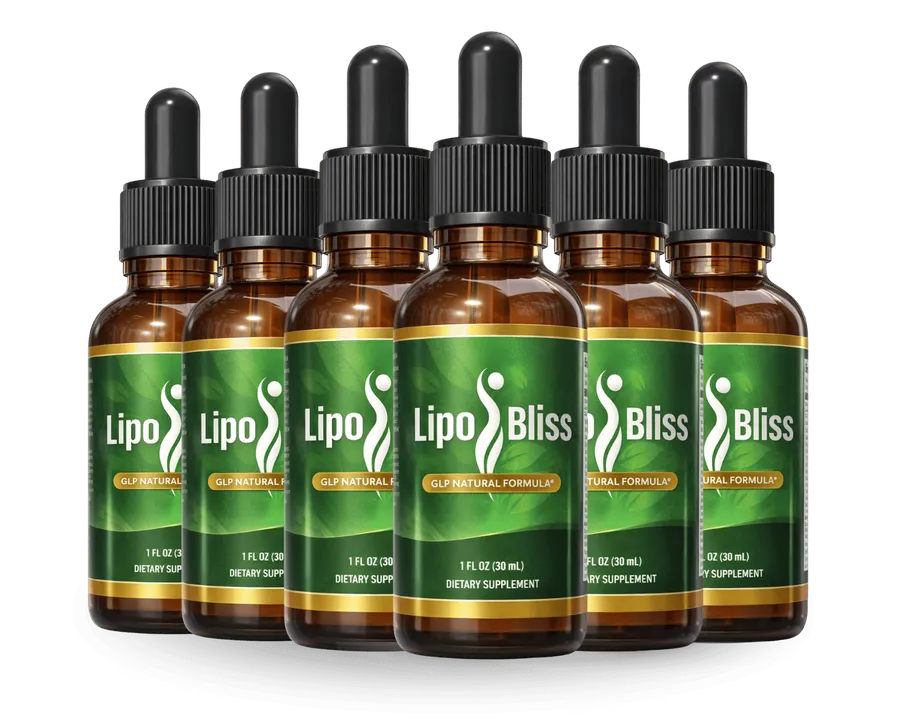
LipoBliss is a botanical liquid formula, not a probiotic. The official store page shows the full ingredient chart alongside the current price and the guarantee terms.
Get OfferChoosing between a gut health supplement probiotic and a prebiotic fibre
If your reason for looking is a specific, recent, identifiable event — a course of antibiotics, for instance — a gut health supplement probiotic with a named strain that was studied for that situation is the more logical starting point, and the strain name is the thing to check before anything else on the label.
If your reason is general, ongoing and vague — you want better regularity, more comfort, a diet that supports the community you already have — fibre is the better lever, and food is the better delivery system. A prebiotic supplement is a reasonable top-up when food is genuinely not getting you there, but it is a top-up, and anyone marketing the best prebiotic supplement for gut health as a replacement for eating plants is selling the expensive half of the answer.
If your reason is weight management, be careful, because that is where claims outrun evidence fastest in both categories. Fibre has a defensible role through fullness, meal volume and slower digestion. Probiotic effects on body weight in humans are inconsistent, strain dependent and small where they appear at all.
How the two compare on dose, form, cost and evidence
| Feature | Probiotic | Prebiotic |
|---|---|---|
| What it is | Live microorganisms | Fermentable fibre or carbohydrate |
| Unit of dose | Colony forming units, usually billions daily | Grams, roughly three to ten or more daily |
| Typical form | Capsule, sachet, fermented food | Powder, chewable, or ordinary food |
| Storage | Often refrigerated; viability declines over time | Shelf stable |
| Time to notice anything | Days to a few weeks | One to three weeks, gas often first |
| Relative cost per month | Moderate to high, rises with strain count and CFU | Low, and lowest of all from food |
| Strength of human evidence | Strong for a few strains and narrow uses; weak for broad claims | Consistent for fermentation and regularity; modest for anything further |
| Main downside | Strain specificity makes products hard to compare | Gas and bloating, particularly at the start |
The row that decides most purchases is the last one people read: strength of evidence. A named strain with a trial behind it for a defined use is a better buy than a blend of eight unnamed strains at an impressive-looking CFU total, and a bag of oats outperforms most prebiotic marketing on both evidence and cost.
Synbiotics, postbiotics and the naming creep
The vocabulary keeps expanding. A synbiotic combines a probiotic and a prebiotic in one product, on the logic that supplying organisms alongside their fuel should work better than either alone. That logic is reasonable and partially supported, but a synbiotic inherits both sets of requirements: the strain still has to be named and studied, and the fibre still has to be present in grams rather than as a token dusting.
Postbiotic is the newer term, referring to inactivated microorganisms or their metabolites. It is a genuine research area with the practical advantage of shelf stability, and it is also a convenient label for anything that fails the live organism test.
Every time this vocabulary expands, the amount a shopper can verify from the label shrinks. That is not an accident of language; it is the direction the incentives push.
The defence is unglamorous and effective: ignore the category noun and read the amounts. Named strain plus CFU, or named fibre plus grams. If neither is printed, no amount of naming tells you what you are buying.
Where any of this connects to weight management
The honest connection is fibre, and it is a modest one. Fibre adds volume and slows gastric emptying, which supports fullness at a meal, and higher-fibre diets are consistently associated with better dietary patterns overall. That is a real mechanism, it is well described, and it is nothing like the effect size implied by advertising for any fat loss product.
The microbiome-to-body-weight link is more interesting and much less settled. Differences in gut bacterial communities have been linked with differences in energy harvest from food, appetite signalling and inflammation, but the strongest demonstrations are in animals, human results are mixed, and the direction of cause is genuinely unresolved. Diet shapes the microbiome at least as clearly as the microbiome shapes weight.
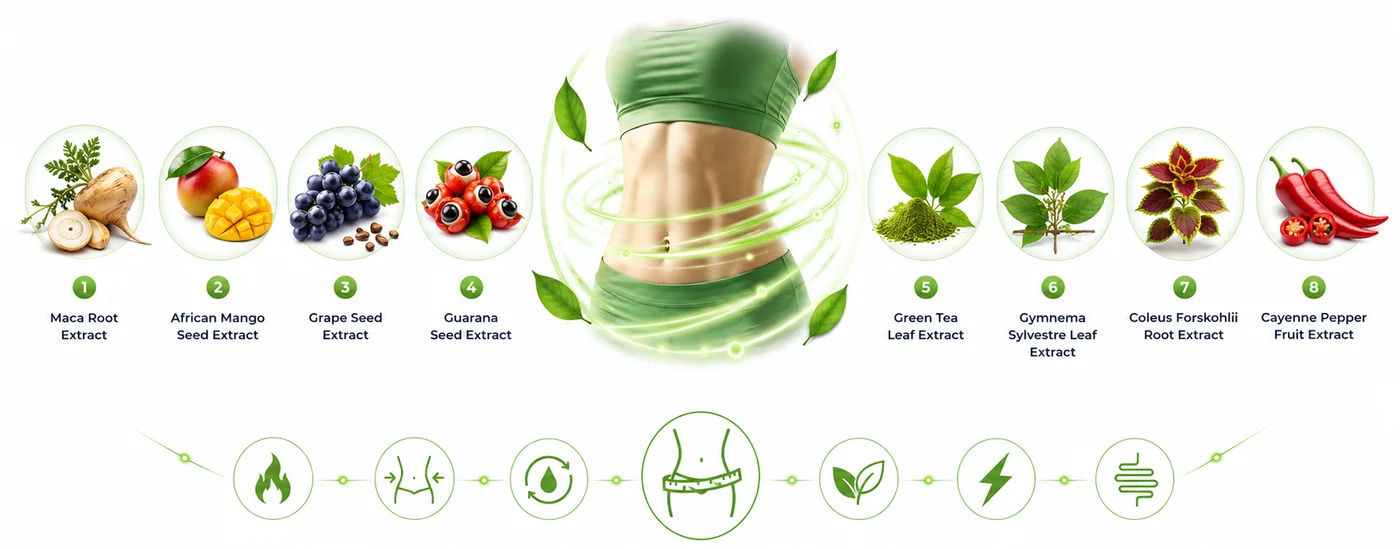
This is worth stating plainly on a site that covers a weight-management product: the LipoBliss formula is a botanical liquid built on extracts such as gymnema, green tea and African mango. It is not a probiotic, it does not contain live organisms, and it should not be assessed as though it were part of this category. If you want the same evidence lens applied to consumer sequencing services, we covered what microbiome test kits can and cannot tell you separately.
What neither of these can do
Neither probiotics nor prebiotics are intended to diagnose, treat, cure or prevent any disease, and neither is a substitute for medical assessment of persistent digestive symptoms. Blood in stool, unexplained weight change, ongoing pain or a sudden change in bowel habit are reasons to see a clinician, not reasons to buy a supplement.
Neither will fix a diet. A probiotic taken alongside very little plant food is supplying organisms into an environment with almost nothing for them to ferment, and a prebiotic added to an otherwise unchanged diet is one variable in a system with many.
Probiotics are also not universally low risk. People who are severely immunocompromised, critically ill, or who have central venous catheters should not take live organism products without medical supervision. Prebiotics can be genuinely uncomfortable for people with certain digestive conditions, some of whom are advised to reduce rather than increase fermentable fibres.
And neither category can promise a result. Evidence in this field describes averages across groups; it does not predict what happens to any individual, and where the evidence is thin we would rather say so than fill the gap with confident language.
Where to buy and what the terms are
The official store is the only place the current LipoBliss price, the package options and the 60-day guarantee window are stated in full.
Get OfferFrequently asked questions
What is the difference between a probiotic and a prebiotic?
A probiotic is live microorganisms taken in an amount intended to have an effect. A prebiotic is a fermentable food component, usually a fibre, that resident gut bacteria use as fuel. One adds organisms, the other feeds the ones already present.
Do I need to take both at the same time?
Not necessarily. Products combining the two are called synbiotics, but a combination is only worth taking if the specific strain and the specific fibre each have evidence at the amount included. Most people get more from raising fibre and plant variety in food first.
Why do probiotic labels list a strain name and a CFU count?
Because probiotic effects are strain specific and dose dependent. Evidence for one strain does not transfer to another strain of the same species, and CFU means colony forming units, the count of live organisms at the end of shelf life if the label is honest about it.
Can probiotics or prebiotics cause bloating?
Yes, especially at the start. Fermentable fibres such as inulin produce gas as bacteria break them down, and some people are sensitive to that. Starting at a low amount and increasing slowly over two to three weeks usually reduces it.
References
- National Center for Complementary and Integrative Health — Probiotics: What You Need To Know.
- NIH Office of Dietary Supplements — Probiotics, health professional fact sheet.
- PubMed — human trials of prebiotic fibres and short-chain fatty acid production.
- Harvard T.H. Chan School of Public Health, The Nutrition Source — Fiber.
- Mayo Clinic — expert answer on probiotics and prebiotics.