LipoBliss vs Metabo Drops: A Fair, Dose-Aware Comparison
Is LipoBliss better than Metabo Drops?
In the LipoBliss vs Metabo Drops question, neither wins outright — they suit different buyers. LipoBliss centers on garcinia HCA, green tea EGCG, L-carnitine and African mango; Metabo Drops leans on chlorogenic acid and L-theanine. Choose on ingredient fit, disclosed doses, and which guarantee and bundle price reassures you more.
- LipoBliss angle: satiety and fat-metabolism support ingredients.
- Metabo Drops angle: green-coffee chlorogenic acid with calm-energy L-theanine.
- Deciders: per-ingredient dose disclosure, guarantee length, cost per bottle in a bundle.
Why this comparison exists, and how to read it
Liquid metabolism drops have become one of the most crowded corners of the weight-management aisle, and LipoBliss and Metabo Drops are two of the names shoppers keep putting side by side. If you have landed here, you have probably narrowed it to these two and want someone to weigh them honestly rather than crown a winner and collect a commission on it. That is the spirit of this piece: a fair, dose-aware LipoBliss vs Metabo Drops comparison that shows you where the two overlap, where they diverge, and which questions actually decide it for a given buyer.
Before any ingredient talk, one ground rule. No liquid drop — neither of these, nor any competitor — is intended to diagnose, treat, cure or prevent any disease, and the honest effect of this whole category on body weight is modest and dependent on diet, activity and sleep. What a comparison can do is tell you which formula is built the way you would want, whether the doses are disclosed, and which purchase terms protect you better. It cannot tell you which one will change your body, because that is not a promise either brand can truthfully make.
LipoBliss vs Metabo Drops: the formulas side by side
Start with what each product is trying to be, because the two take noticeably different routes to the same aisle.
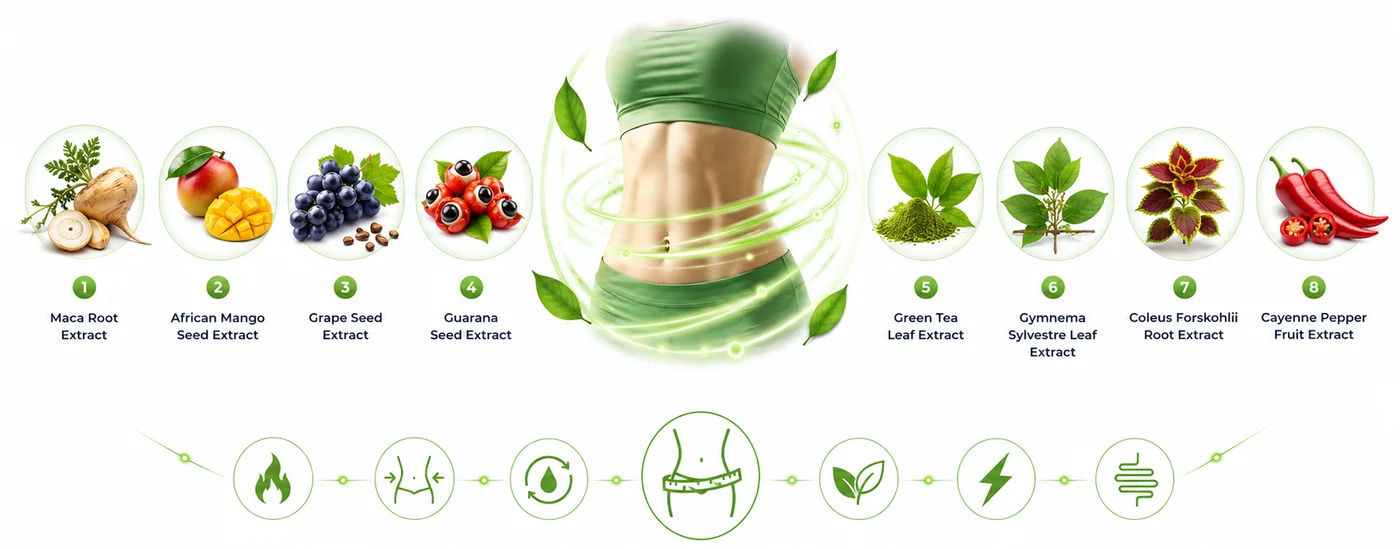
LipoBliss is built around a satiety-and-fat-metabolism story. Its signature ingredients are garcinia cambogia standardized for hydroxycitric acid (HCA), green tea extract standardized for EGCG, L-carnitine, and African mango seed extract, sitting alongside supporting botanicals such as gymnema, coleus forskohlii, cayenne and maca. The logic of that stack is appetite and fat-handling: HCA and African mango on the satiety side, green tea catechins and L-carnitine on the fat-metabolism side. It is a liquid taken by dropper, positioned as a once-daily routine.
Metabo Drops tends to foreground a different pair: chlorogenic acid from green coffee bean, and L-theanine, the amino acid associated with calm focus. That combination reads as a calm-energy, metabolic-support angle rather than an appetite-first one — chlorogenic acid for the metabolic story, L-theanine to smooth the stimulant edge that green-coffee and green-tea formulas can carry. It is also a stimulant-conscious liquid, which is the one design value the two clearly share.
So the first honest finding is that these are not clones. They are two reasonable interpretations of the same product category, and the right one depends on whether you want the garcinia-and-African-mango satiety route that the LipoBliss formula and its full ingredient panel lay out, or the green-coffee-and-theanine route Metabo Drops emphasizes.
Dose disclosure is the real battleground
Here is the part most comparison articles skip, and it matters more than any ingredient name. An ingredient does nothing at a dose too small to matter, and the entire difference between a formula that could plausibly do what its research suggests and one that is merely name-dropping the research lives in the amount per serving. Green tea catechin studies, garcinia HCA trials, African mango trials and chlorogenic acid trials all used specific quantities. A drop that lists the ingredient but hides the amount inside a proprietary blend is asking you to take the dose on faith.
So the single most useful thing you can do with either bottle in hand is turn it over and check whether the label states a per-ingredient amount or only a blend total. If LipoBliss discloses the milligrams of HCA, EGCG, L-carnitine and African mango per serving, you can compare those against the researched amounts. If Metabo Drops discloses its chlorogenic acid and L-theanine amounts, you can do the same. Whichever brand is more transparent about dosing has handed you the better tool to judge it — and transparency itself is a signal about how a company treats the rest of its claims. We walk through exactly how to size these amounts in our guide to how gymnema and cayenne stack up when you check the doses.
See the LipoBliss label, dose and current price
The official store lists the full ingredient panel, the package options and the 60-day guarantee terms so you can compare on facts, not on marketing copy.
Get OfferIngredient-by-ingredient: what each headline compound is for
Garcinia HCA (LipoBliss). Hydroxycitric acid from garcinia cambogia is studied mainly for its proposed effect on appetite and fat synthesis. Human results on body weight are mixed and generally small, but it remains a coherent satiety-side ingredient and a defensible thing to build a formula around when it is dosed sensibly.
Green tea EGCG (LipoBliss). The catechin EGCG, usually studied alongside caffeine, has the most replicated mechanism in the category on energy expenditure and fat oxidation. The effect sizes are modest and caffeine sensitivity varies, but green tea extract is one of the more evidence-backed inclusions either drop can carry.
L-carnitine (LipoBliss). Carnitine's role in shuttling fatty acids into mitochondria makes it a logical fat-metabolism inclusion. Supplemental benefit for weight in well-nourished people is uncertain, but it is a reasonable, low-drama ingredient.
African mango (LipoBliss). Irvingia gabonensis seed extract is the satiety-and-waist ingredient we cover in depth in our African mango seed extract, appetite and waist-size explainer; early studies at 150 mg twice daily are encouraging but modest and need larger replication.
Chlorogenic acid (Metabo Drops). The green-coffee-bean compound is the ingredient most associated with Metabo Drops. Some short trials suggest small effects on weight and metabolic markers, though several were small and industry-funded, so read the evidence cautiously.
L-theanine (Metabo Drops). Not a weight-loss ingredient in its own right, theanine is included for calm, jitter-free focus, taking the edge off any stimulant content. It is a quality-of-experience inclusion rather than a fat-loss one, which is a legitimate thing to want.
Format, taste and daily use
Both are liquid drops, and both lean stimulant-conscious, so on delivery they are more alike than different. The practical questions are the same for either: how many drops make a serving, how the liquid tastes held under the tongue, whether it is once or twice daily, and whether it fits a routine you will actually keep. A drop you enjoy taking and remember to take beats a capsule you resent and skip, and adherence is genuinely one of the few variables in this whole conversation you fully control. If timing matters to you, our companion piece on what to realistically expect from LipoBliss and over what timeframe sets sensible expectations for either format.
Guarantee and price per bottle
This is where a comparison turns from interesting to decisive, because the terms of purchase are concrete in a way the ingredient debate often is not. LipoBliss is sold with a 60-day money-back guarantee on official-store orders, and we cover exactly how that works — and why it only applies through the official channel — in our LipoBliss money-back guarantee explained guide. Before you buy either brand, put the two guarantees next to each other and read three things: the length of the window, whether opened bottles are covered, and whether the guarantee is tied to the official store rather than a reseller.
Then do the arithmetic that marketing hopes you skip: cost per bottle inside a bundle, not the sticker price of the bundle. Both categories price a single bottle high and drop the per-bottle cost sharply on three- and six-bottle packs. That can be genuine value if you intend to run a full trial, and a trap if you are buying six bottles of something you have not tried yet. The disciplined move is to weigh the per-bottle bundle cost against the guarantee window: a longer guarantee makes a larger starting commitment less risky, and a short guarantee makes it wise to start small.
Two myths worth clearing up
"Liquid drops absorb better, so they work better." Sublingual delivery can suit some compounds, but "absorbs faster" is not the same as "produces more weight loss," and the marketing routinely collapses the two. The bottleneck in this category is dose and adherence, not whether the ingredient arrived as a liquid or a capsule. Choose the format you will keep taking, and judge the formula on its amounts.
"One of these must be the secret the other is hiding." Neither LipoBliss nor Metabo Drops is a secret. They are two competently positioned formulas with different flagship ingredients and, for many buyers, the honest answer is that both would perform similarly because the dominant variable is what you eat and how you move, not which dropper is on the counter. That is not a knock on either product; it is the realistic frame for the whole category.
Ready to compare on the real terms?
Check the LipoBliss ingredient panel, per-bottle bundle pricing and the 60-day guarantee at the official store, then weigh it against whatever Metabo Drops discloses.
Get OfferRelated reading
- LipoBliss drops reviews 2026: legit or scam?
- LipoBliss money-back guarantee explained in full
- Metabolism-boosting ingredients: an evidence guide
- LipoBliss real results: what to expect and when
Frequently asked questions
Is LipoBliss better than Metabo Drops?
Neither is universally better; they suit different buyers. LipoBliss centers on garcinia HCA, green tea EGCG, L-carnitine and African mango, while Metabo Drops leans on chlorogenic acid and L-theanine. The better choice depends on which ingredient profile you want, whether the doses are disclosed, and which guarantee and bundle price you find more reassuring.
How do the ingredients compare?
LipoBliss is built around garcinia hydroxycitric acid, green tea EGCG, L-carnitine and African mango seed extract, a satiety-and-fat-metabolism angle. Metabo Drops highlights chlorogenic acid from green coffee and L-theanine, a calm-energy angle. Both are stimulant-conscious liquids, so the deciding factor is per-ingredient dosing versus the amounts used in research, which not every label discloses.
Which weight-loss drops offer a better guarantee?
Compare the two policies directly before buying. LipoBliss is sold with a 60-day money-back guarantee on official-store orders. Read the length of each guarantee window, whether it covers opened bottles, and whether it applies only to the official channel, because a marketplace reseller does not carry the manufacturer guarantee for either brand.
Are liquid metabolism drops worth it?
Liquid drops are a delivery format, not a shortcut. They can be convenient and pleasant to take, but the value still comes down to whether the ingredients are dosed at researched amounts and whether you pair them with diet, activity and sleep. No drop, liquid or otherwise, replaces those, and effects on body weight in the evidence are modest at best.
References
- NIH Office of Dietary Supplements — Dietary Supplements for Weight Loss, health professional fact sheet.
- National Center for Complementary and Integrative Health — Green Tea.
- PubMed — trials of chlorogenic acid and green coffee extract on body weight.
- PubMed — hydroxycitric acid and garcinia cambogia weight studies.
- Harvard T.H. Chan School of Public Health, The Nutrition Source — Healthy Weight.